Making Cloud Storage Accessible Without Limiting Expert Users
Role: UX research, product strategy, interaction design, prototyping, and cross-functional facilitation
Product: B2B cloud infrastructure
Outcome: Bucket-creation success increased from 30% to 87% in usability testing; active panel usage reached 45%; support tickets fell by 50%; Storage NPS increased by 23 points.

The Context
Sotoon Storage is a core service within Sotoon’s cloud platform. Experienced users primarily managed storage through the command line, while the graphical interface accounted for only 18% of active usage.
The opportunity was not to replace the CLI. It was to make the visual product complete and dependable enough for users with different levels of technical expertise—so they could create, configure, and manage storage without unnecessary support or documentation.
What the Evidence Showed
I combined product analytics, session recordings, support tickets, and usability research to understand why users were leaving the panel.
- 70% of users left within 45 seconds without taking action.
- The bucket-creation funnel lost 40% of users between type selection and configuration.
- Creating a bucket took about three minutes—almost twice as long as comparable flows in Arvan and AWS.
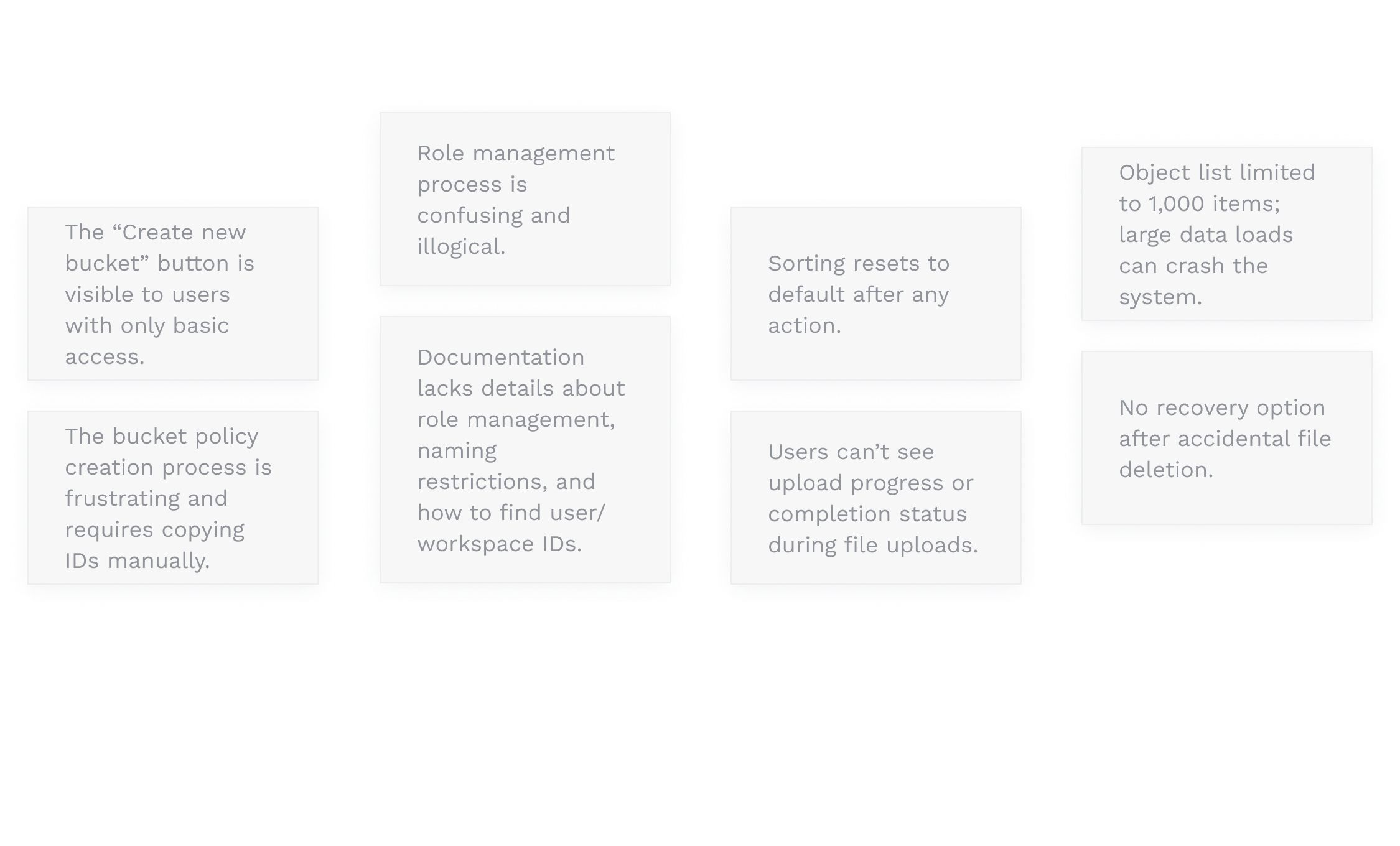
- Session recordings showed repeated clicks on a disabled “Create bucket” action, confusion between Objects and Settings, and users abandoning the interface for the CLI.
- Ten recurring issues accounted for roughly 25% of Storage-related support tickets.
Three themes emerged: users could not understand why an action was unavailable; access management was inconsistent; and destructive actions had no meaningful recovery path.
Setting the Product Direction
I prioritized improvements using both user impact and business cost. The work focused on:
- Fixing the critical creation and upload journeys.
- Connecting Storage permissions to the platform’s IAM model.
- Adding frequently requested capabilities—versioning, migration, sharing, and archive storage—that would make the panel a credible alternative to the CLI.
I facilitated product and engineering discussions around technical constraints, including S3 and Ceph limitations, paginated object listings, and restricted data-center selection. This helped the team make explicit trade-offs instead of passing backend complexity on to users.
The Solution
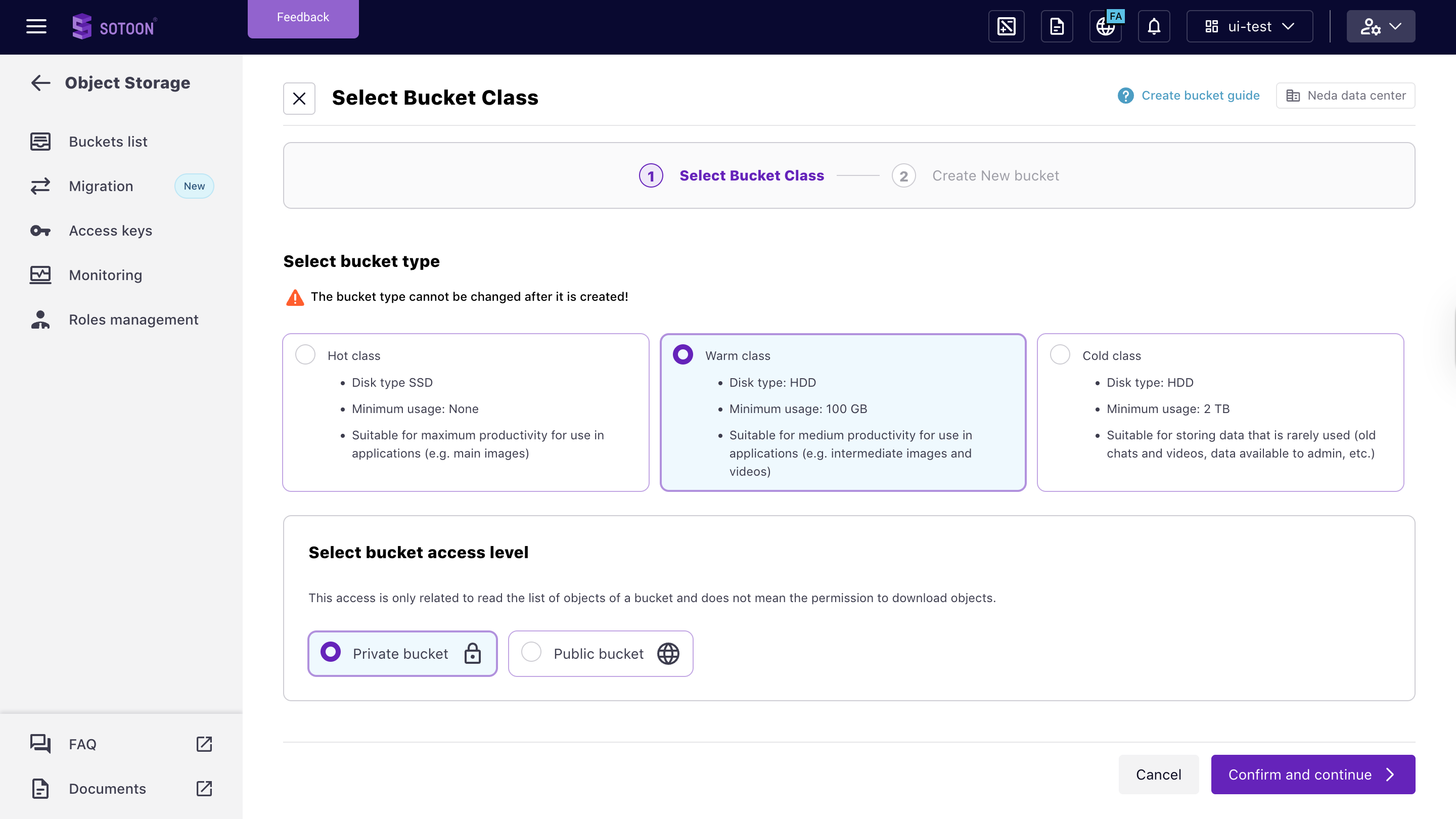
A guided bucket-creation flow
I redesigned creation as two focused steps: first choose the bucket type and access model, then name and validate the configuration. Contextual guidance, inline validation, and clearer error states helped users understand both the decision and its consequences. The new flow also introduced archive-bucket creation in the panel.
In usability testing, task completion improved from 30% to 87%.
A more predictable upload experience
The upload journey now separates file or folder selection from access settings. Users can review their selection before upload, follow progress, and understand failures through actionable feedback. Nine of ten participants completed the task without assistance.
Consistent access management
Storage permissions were aligned with Sotoon’s IAM system, replacing a fragmented access model with a more consistent one. Automatic access-key creation also reduced time to first usable setup from approximately 24 hours to under one minute.
Capabilities that support real workflows
The redesigned product introduced concepts and flows for:
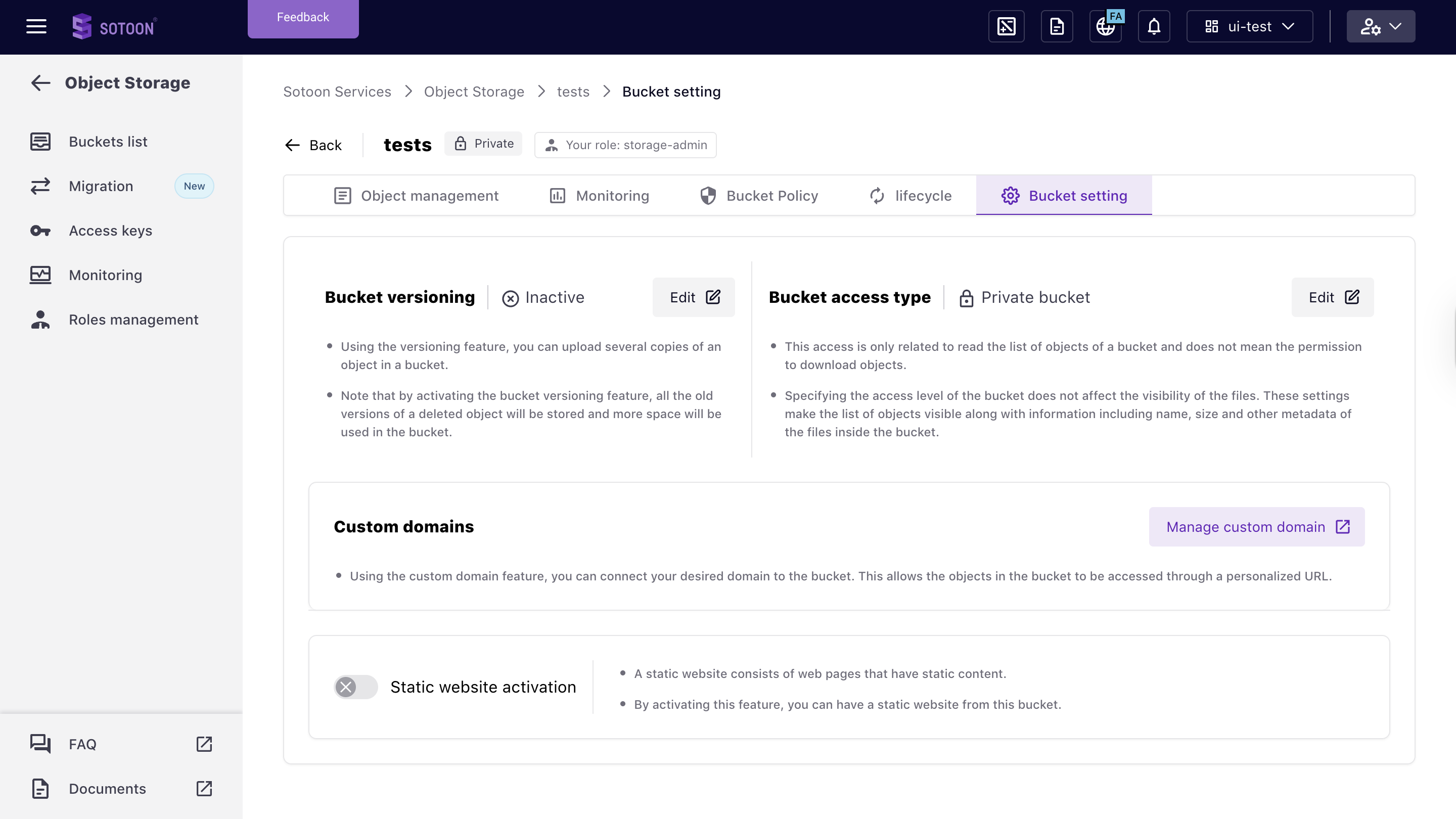
- Static website hosting for simple front-end deployments.
- Migration from AWS, Arvan, and other Sotoon workspaces.
- File sharing through expiring public links.
- Version history and recovery.
- Clear bucket visibility and storage-tier selection.
Impact
- 87% bucket-creation success rate in usability testing.
- 45% active panel usage, up from the original 18% baseline.
- 50% reduction in related support tickets.
- 23-point increase in Storage NPS.
- Time to first usable setup reduced from roughly a day to less than a minute.
What I Learned
This project required more than improving individual screens. I had to connect customer evidence, product scope, access architecture, and engineering feasibility into one direction. It reinforced an important principle in my work: technical depth does not need to be removed, but users should not have to reconstruct the system to complete a task.
If I continued the work, I would introduce contextual onboarding earlier and define feature-level adoption metrics before release, making it easier to distinguish discoverability problems from product-value problems.