Reducing Decision Fatigue in a Video-on-Demand Product
Role: UX research, synthesis, journey mapping, and concept design
Product: Video-on-demand platform
Focus: Discovery, personalization, navigation, and cross-device continuity
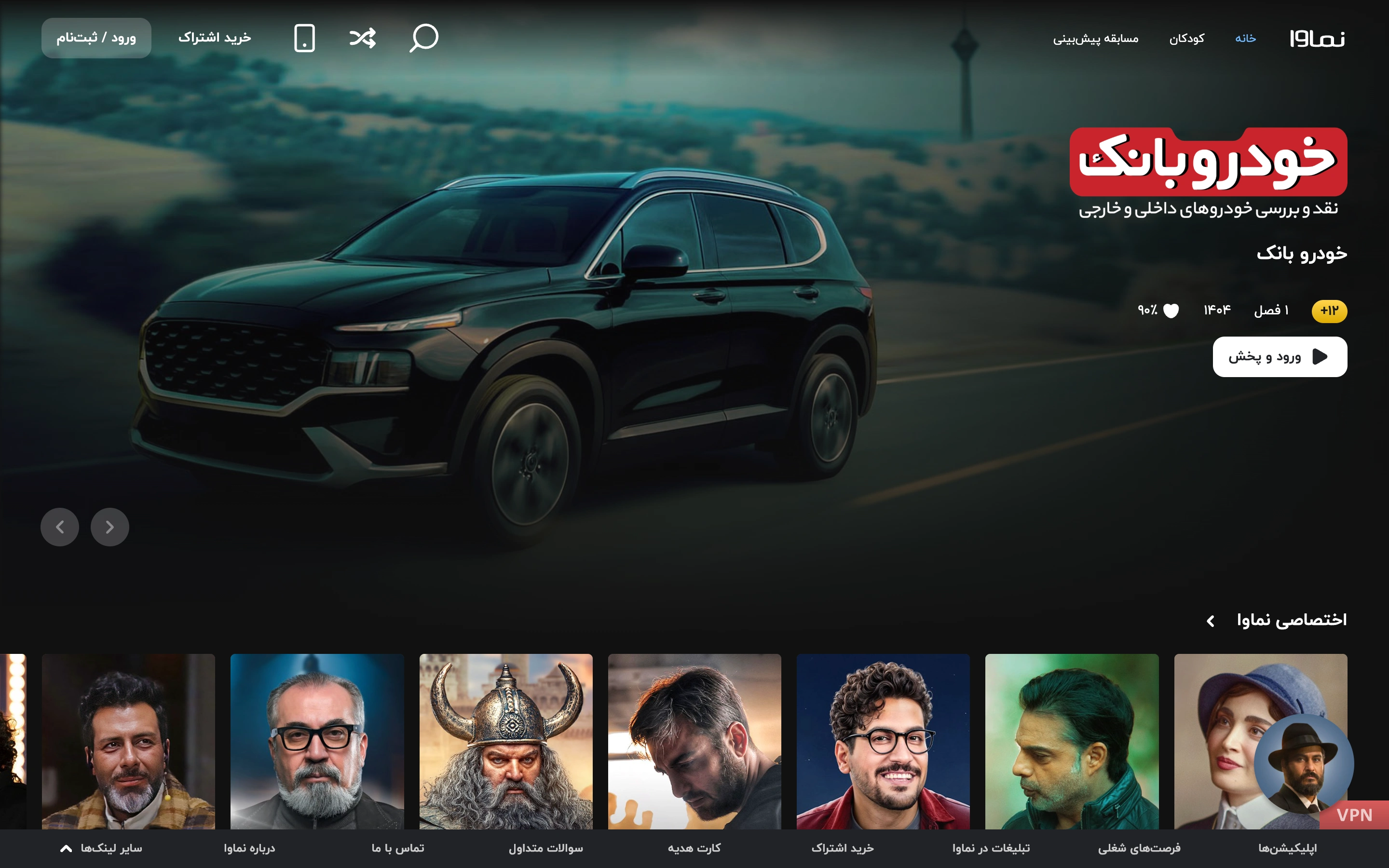
The Context
Namava is one of Iran’s leading streaming services, with 3.7 million monthly visits during the research period. Engagement among active visitors was strong—an average of 5.9 pages and 6 minutes 45 seconds per visit—but a 37.69% bounce rate suggested that many visitors were not finding a reason to continue.
The project investigated who Namava’s audiences were, how people decided what to watch, where discovery broke down, and which product changes could improve engagement and loyalty.
The Industry Problem
Streaming products compete on catalog, but the user experience is increasingly shaped by decision quality. External research indicated that 48% of viewers struggled to find content, 49% felt overwhelmed by choice, and 47% were frustrated by the need for multiple subscriptions.
For Namava, the opportunity was not simply to display more titles. It was to help users move from “I want to watch something” to a confident choice with less effort.
Research Approach
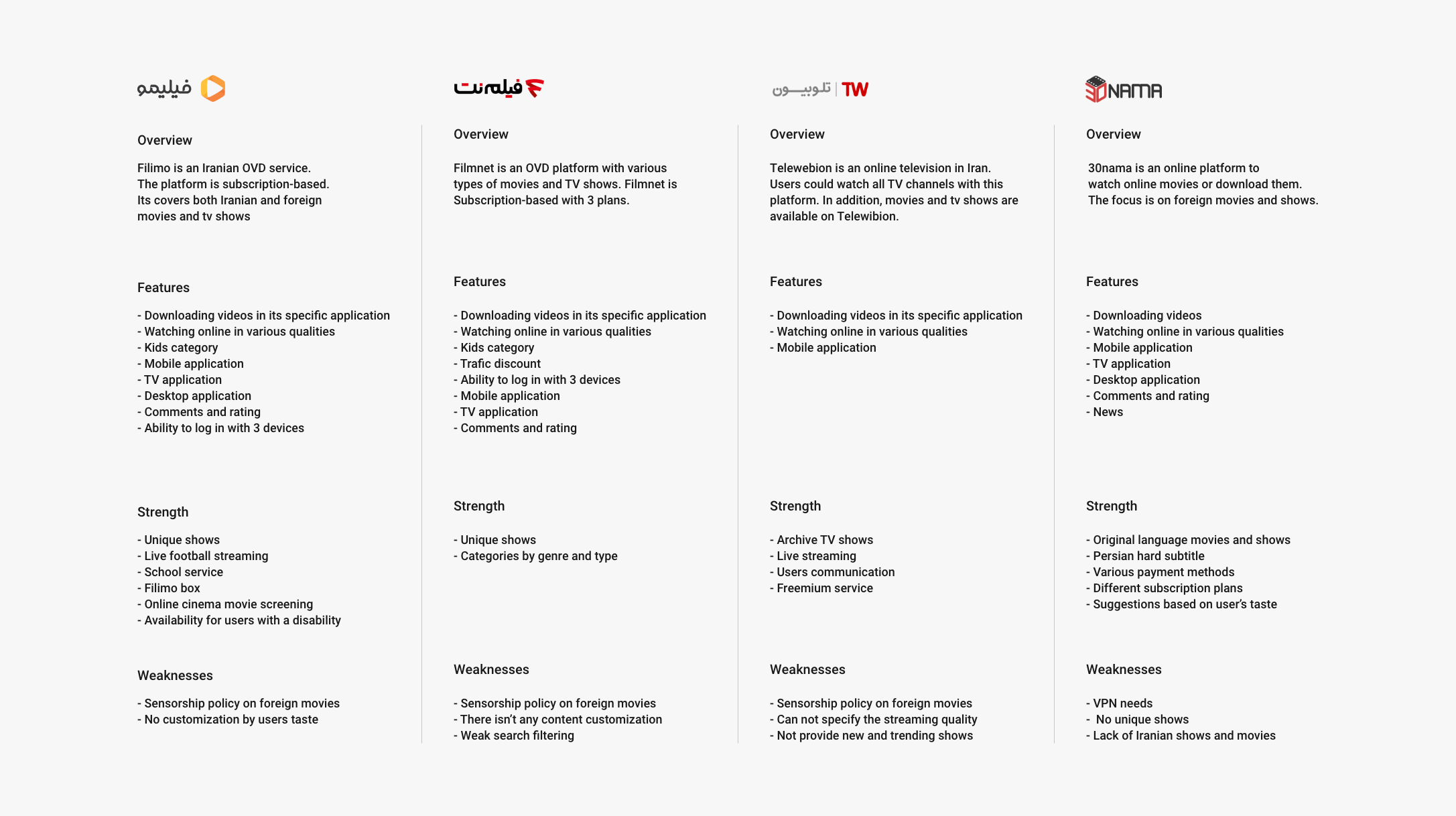
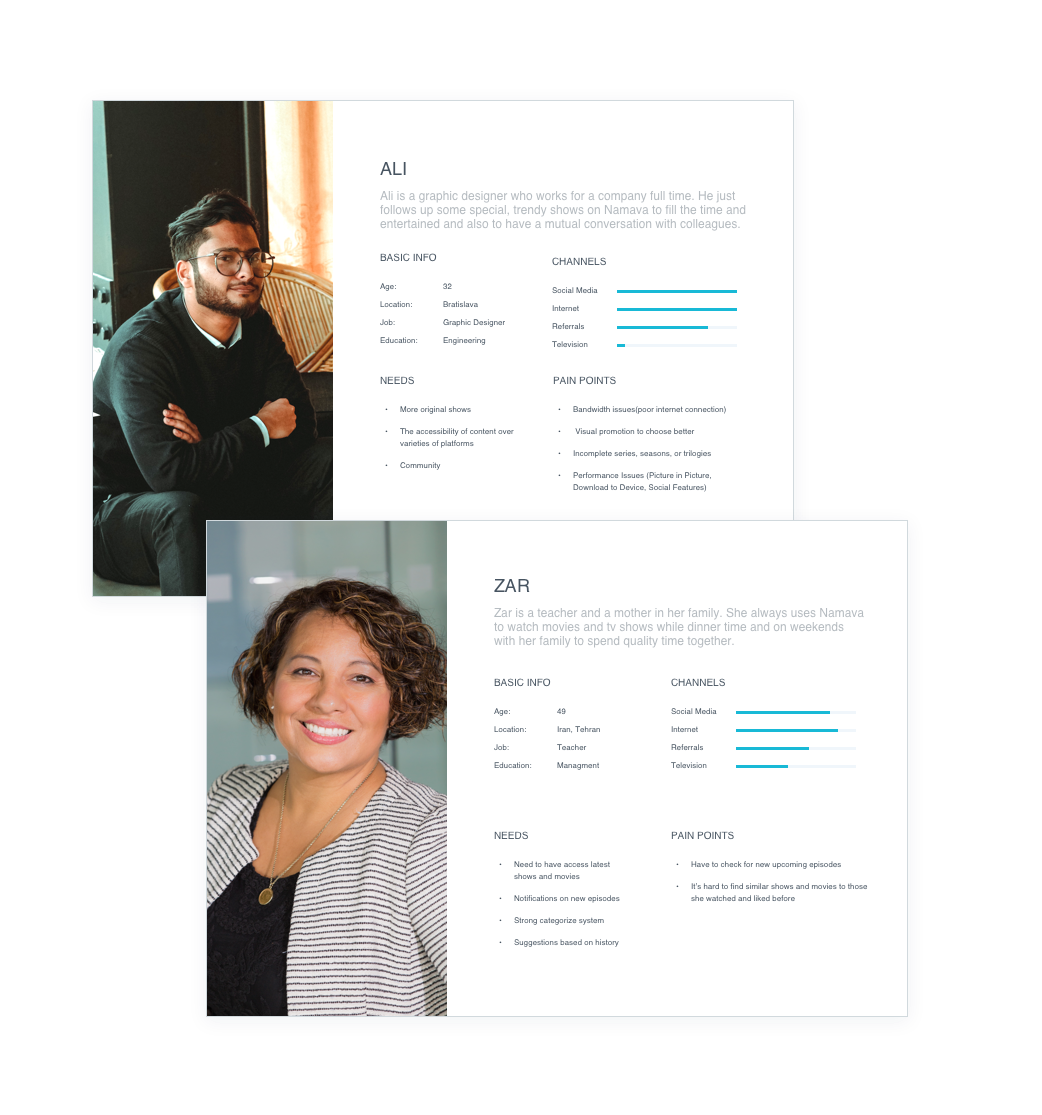
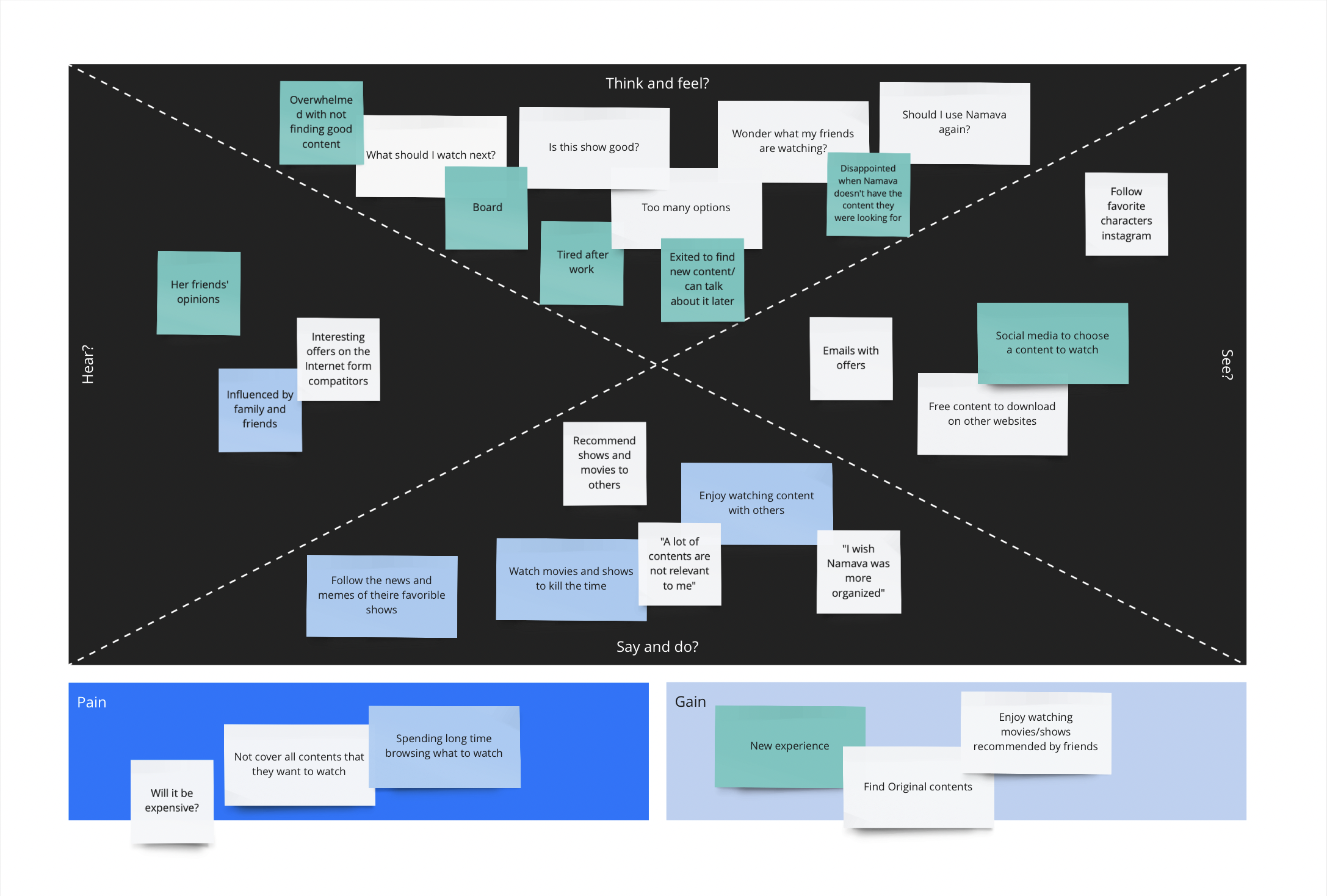
I combined platform data, market and competitor research, a survey, one-to-one interviews, usability tasks, personas, empathy mapping, and a customer journey.
The research explored demographics, viewing habits, preferred genres, social influence, device use, and the factors people considered before choosing content. Usability tasks included finding and resuming a show, searching for a recommendation, saving something for later, and browsing with categories or filters.

What I Learned
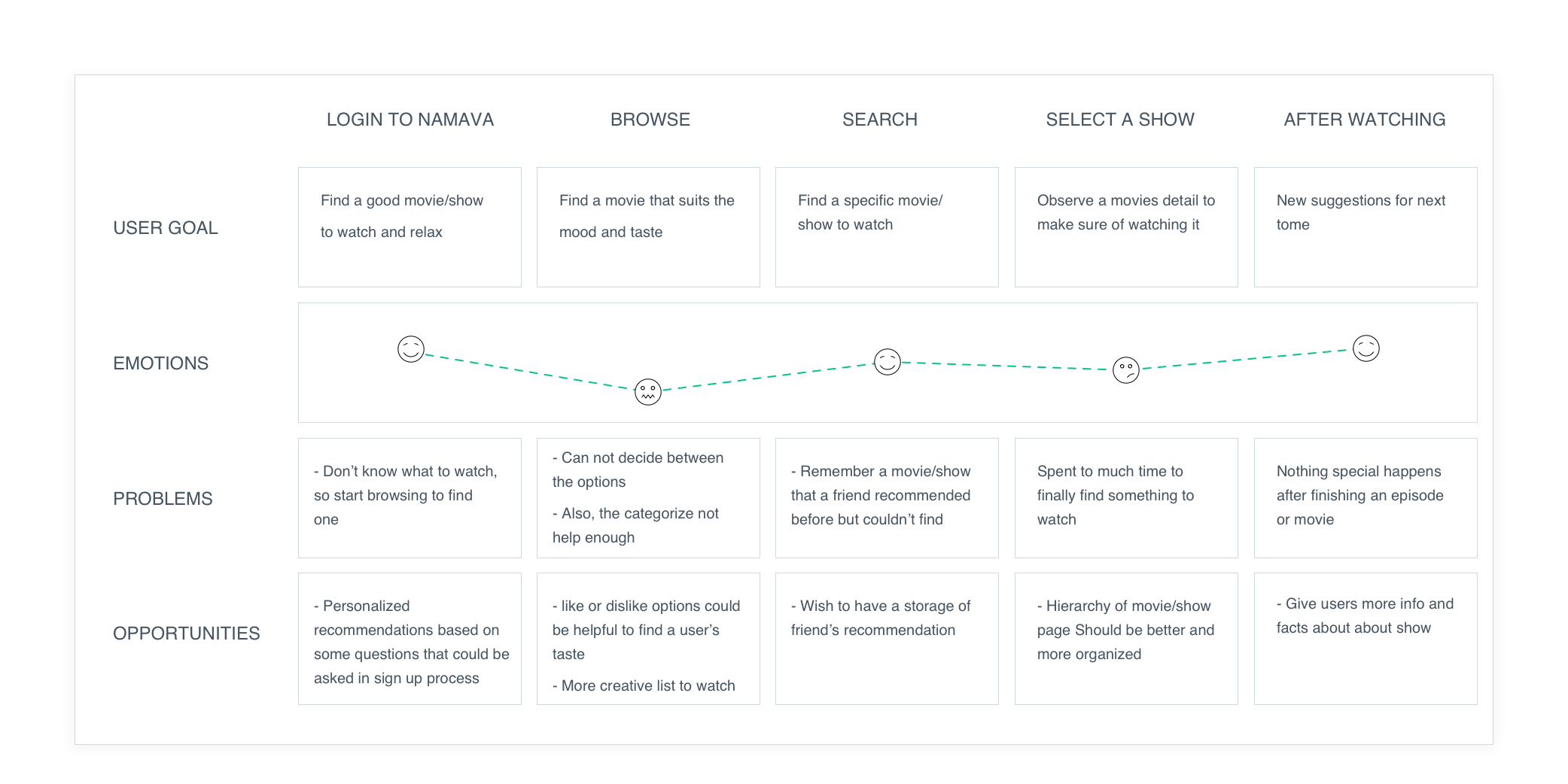
Discovery happened outside the product
Many users arrived with a title suggested by friends, social media, or word of mouth. Namava’s own recommendations were not doing enough to shape intent.
Choice felt broad but not personal
Users wanted stronger genre options and recommendations that reflected their tastes. A large catalog without meaningful organization increased decision effort.
Continuity was fragile
Problems with episode order, resuming content, saved titles, and consistency across devices weakened trust in the platform.
Different audiences entered with different motivations
Middle-aged parents formed a loyal segment, while younger viewers were especially influenced by Namava Originals, peers, and social media. A single discovery strategy could not serve both equally well.
One participant captured the problem clearly: “I spend more time looking for something than actually watching.”
Design Principles
I translated the findings into four product principles.
Help people choose, not only browse
Mood-based collections, weekly charts, trailers, previews, ratings, and clearer editorial context can reduce the effort required to decide.
Learn preferences early
A lightweight onboarding flow can gather favorite genres, actors, and directors, giving recommendations a useful starting point before enough viewing history exists.
Preserve intent across sessions and devices
Watchlists, reliable progress, correct episode order, and consistent cross-device behavior help users continue without reconstructing what they were doing.
Create reasons to return
Relevant new-episode alerts and optional weekly recommendations can turn reactive visits into a more intentional relationship—provided users control frequency and channel.
Product Direction
The proposed direction included:
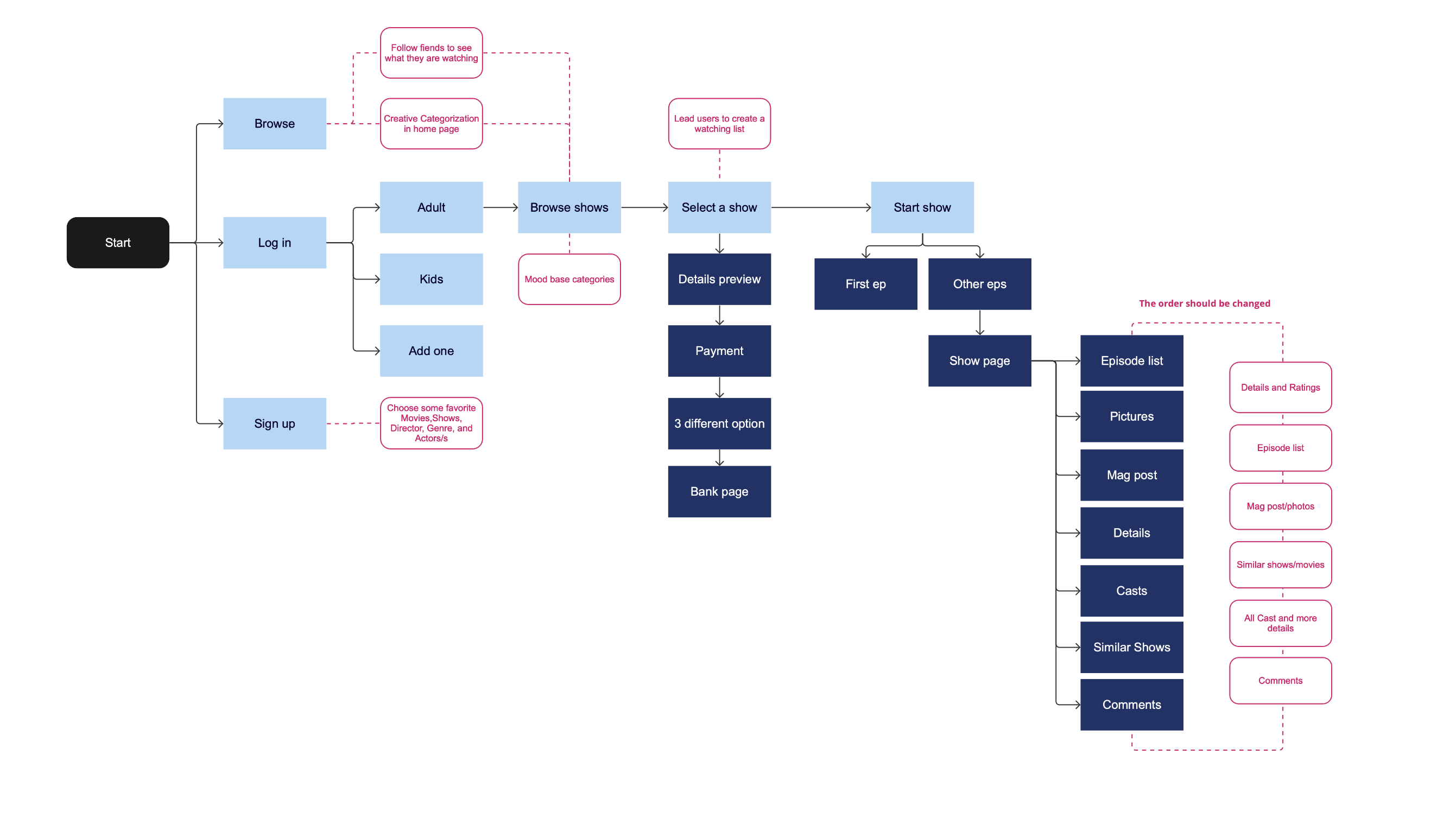
- A simplified navigation structure.
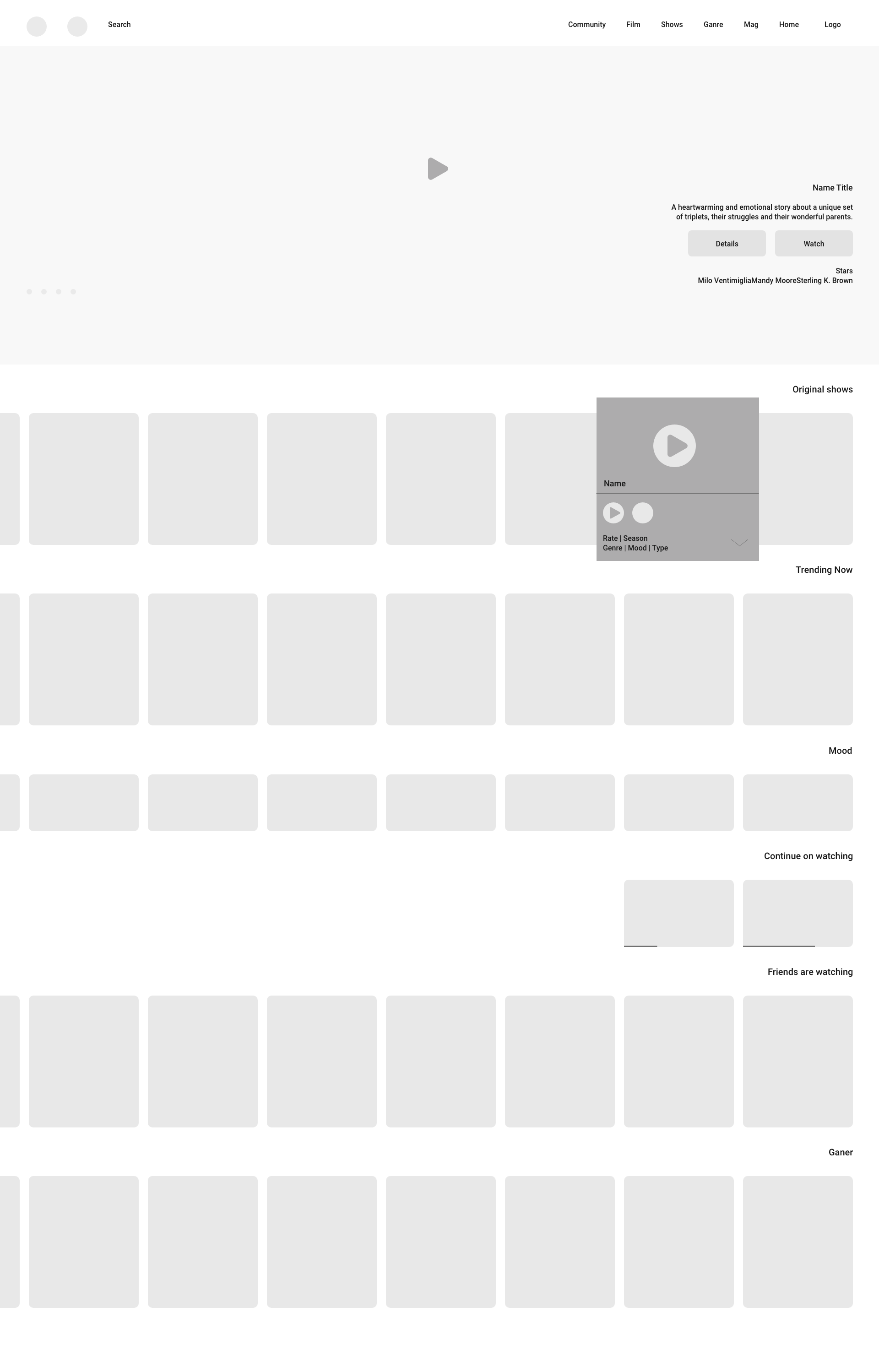
- Mood-based discovery and weekly top lists.
- Recommendations informed by onboarding and viewing behavior.
- User-controlled watchlists.
- Trailers and previews to support decisions.
- More consistent resume and episode-order behavior.
- Optional notifications and digests for new or relevant content.
- Exploration of lightweight social features such as sharing, rating, and following.
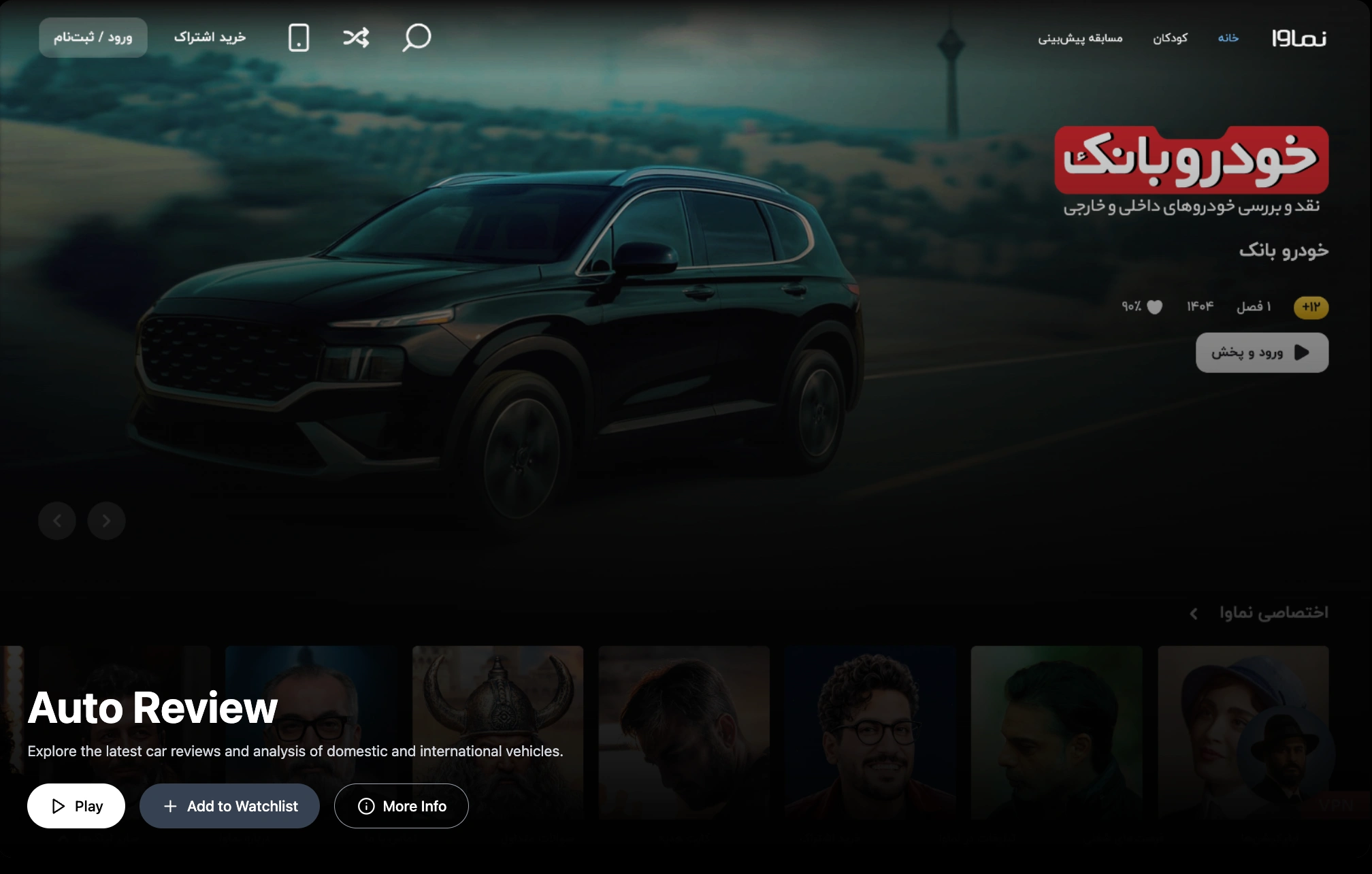
I created a mid-fidelity homepage concept to show how these ideas could work together in the primary discovery journey.
Outcome and Validation Plan
This project produced a prioritized product direction rather than a measured release. The next step is to test the navigation, onboarding, mood browsing, and decision-support concepts with a broader sample and on mobile.
I would measure recommendation engagement, time to first play, search-to-play conversion, watchlist use, successful resume behavior, cross-device continuation, and retention by audience segment. These measures would help the team understand whether the design reduced decision effort or merely changed the presentation.
Reflection
Content discovery is not a single recommendation component. It is a system that begins before users open the product and continues across search, browsing, evaluation, playback, and return visits. The strongest opportunity for Namava was to connect those moments so the platform could support decisions—not simply offer more choice.