Designing Trust Into a Family Ride Experience
Role: UX research, product strategy, and concept design
Product: Regional ride-hailing platform
Research: Market and competitor analysis, parent survey, interviews with 12 parents and five drivers
Deliverable: A phased product strategy and Family feature prototype
The Opportunity
Parents were already using Snapp to arrange rides for children, including trips where a child traveled without an adult. Yet the product was designed around an individual rider and did not address the additional responsibility, visibility, and reassurance families needed.
This created both a customer problem and a market opportunity. The project explored how Snapp could support families more safely, differentiate its service, and validate demand before investing in a dedicated children’s transportation operation.
The Core Design Question
How might we give parents enough visibility and control to trust a ride they are not taking themselves—while creating an experience that remains practical for children, drivers, and Snapp’s operations?
Researching Trust
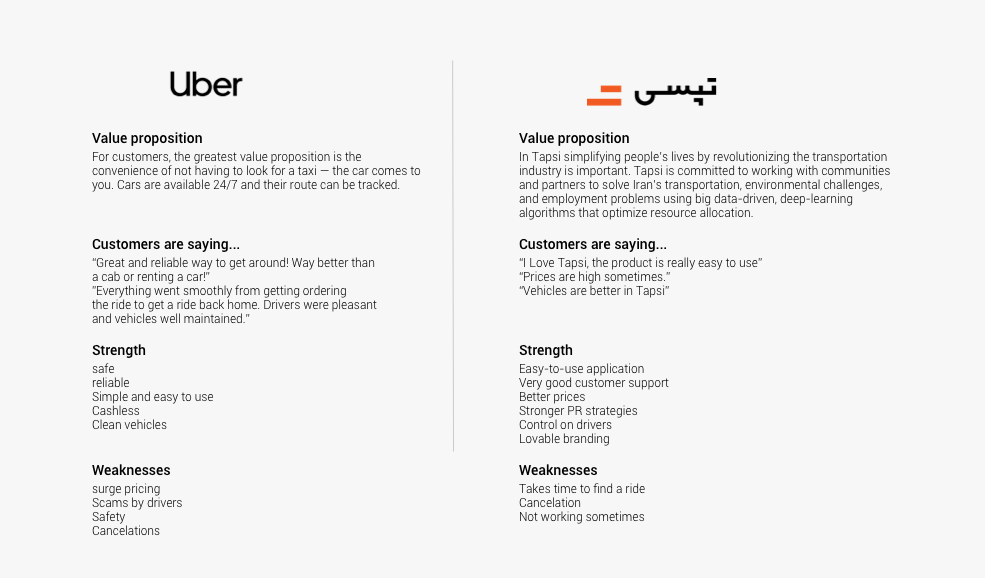
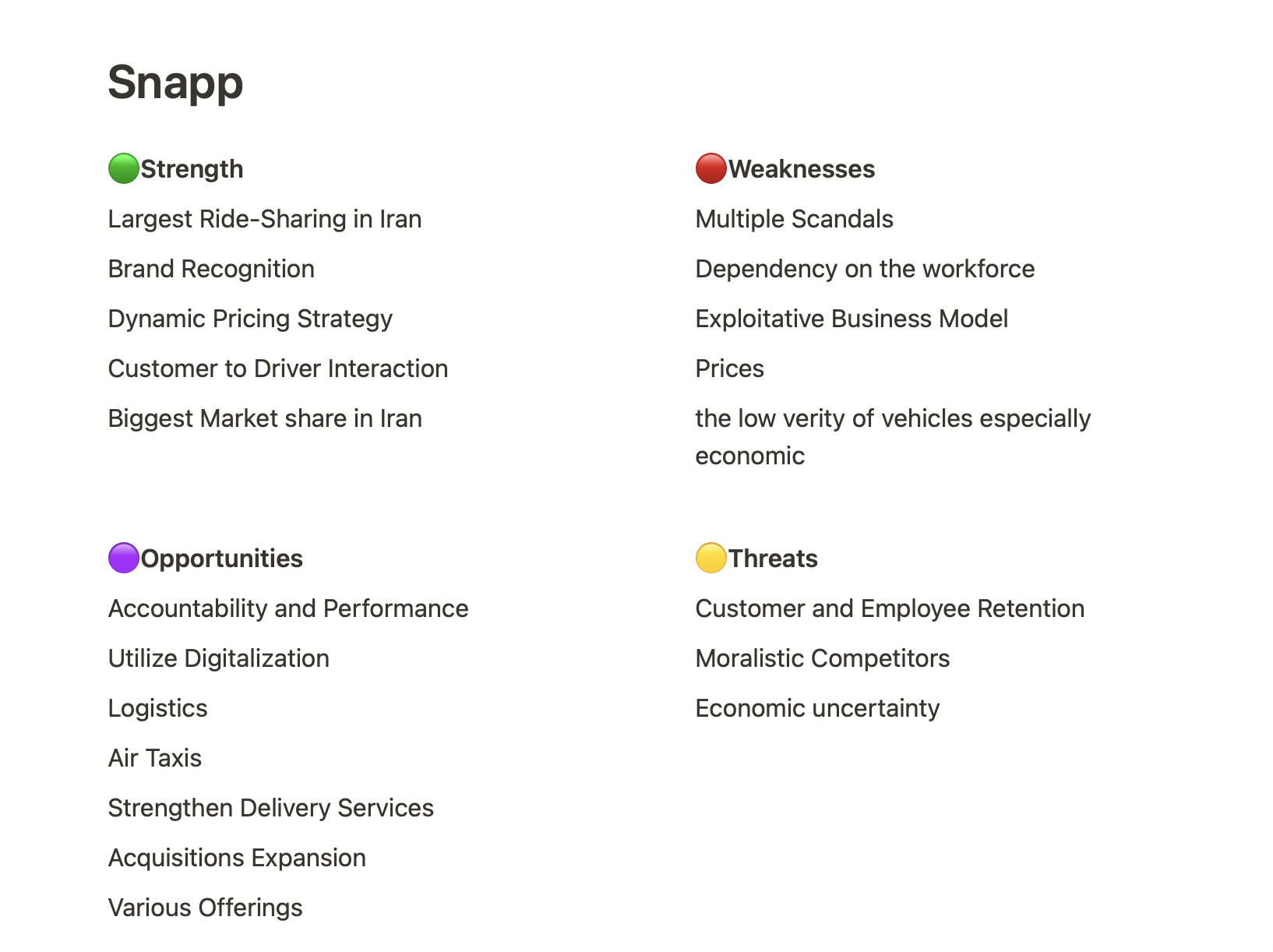
I combined market analysis, benchmarking of services such as Uber Family and Lyft Family, parent surveys, and interviews with 12 parents and five drivers. A lightweight question added after rides also helped explore how often children were traveling as passengers.
The research surfaced several sources of anxiety:
- Parents had limited visibility into driver screening and relevant experience.
- Vehicle quality and safety felt inconsistent.
- Existing tracking was useful but did not explain what would happen if something went wrong.
- Incident escalation and support pathways were unclear.
- Parents needed proactive updates, not only the ability to open a map and check.
The key insight was that location tracking alone does not create trust. Trust comes from a system of preparation, transparency, accountability, and timely communication.


Balancing User and Business Needs
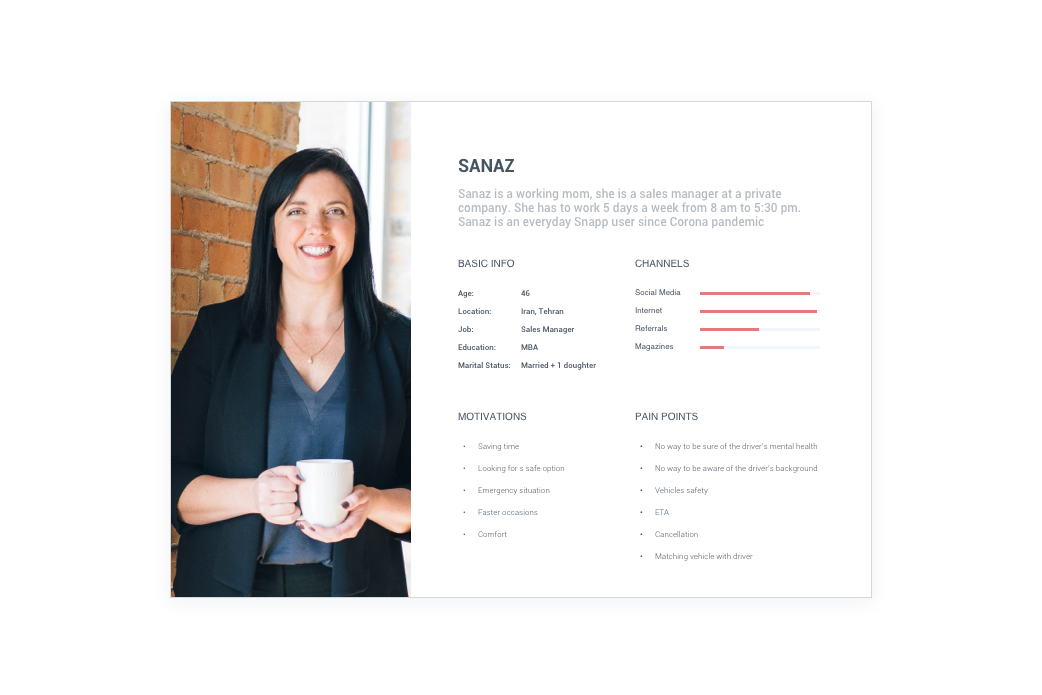
Parents wanted safety and reassurance. Snapp needed a solution that could fit existing technology and operations, scale responsibly, and avoid making promises the service could not reliably keep.
I separated the opportunity into two horizons:
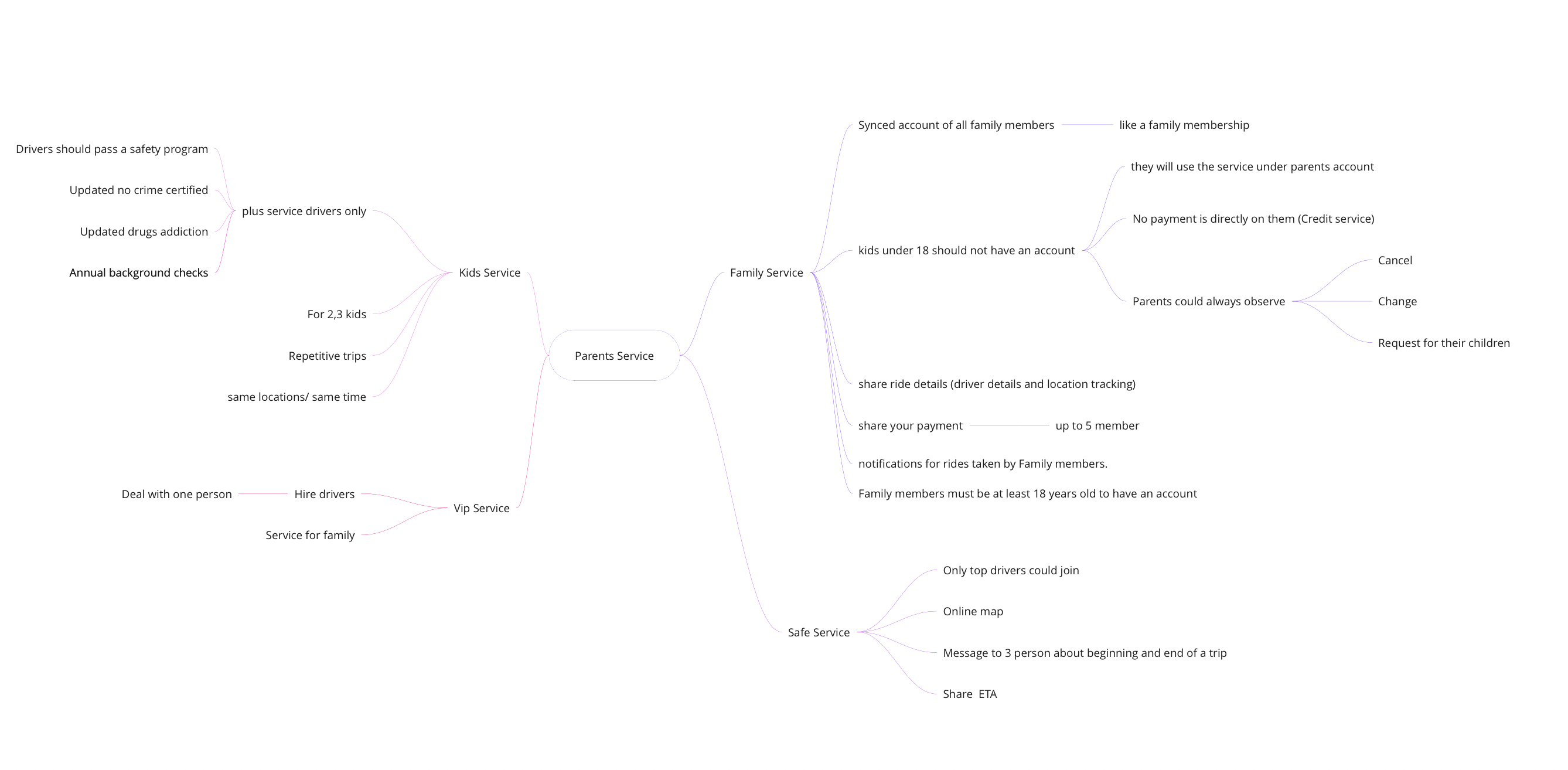
- A Family feature that could extend the current platform and validate behavior.
- A dedicated children’s service that would require new operational standards, insurance, driver training, support, and governance.
This prevented a complex service proposition from being treated as a simple interface feature.
The Family Feature
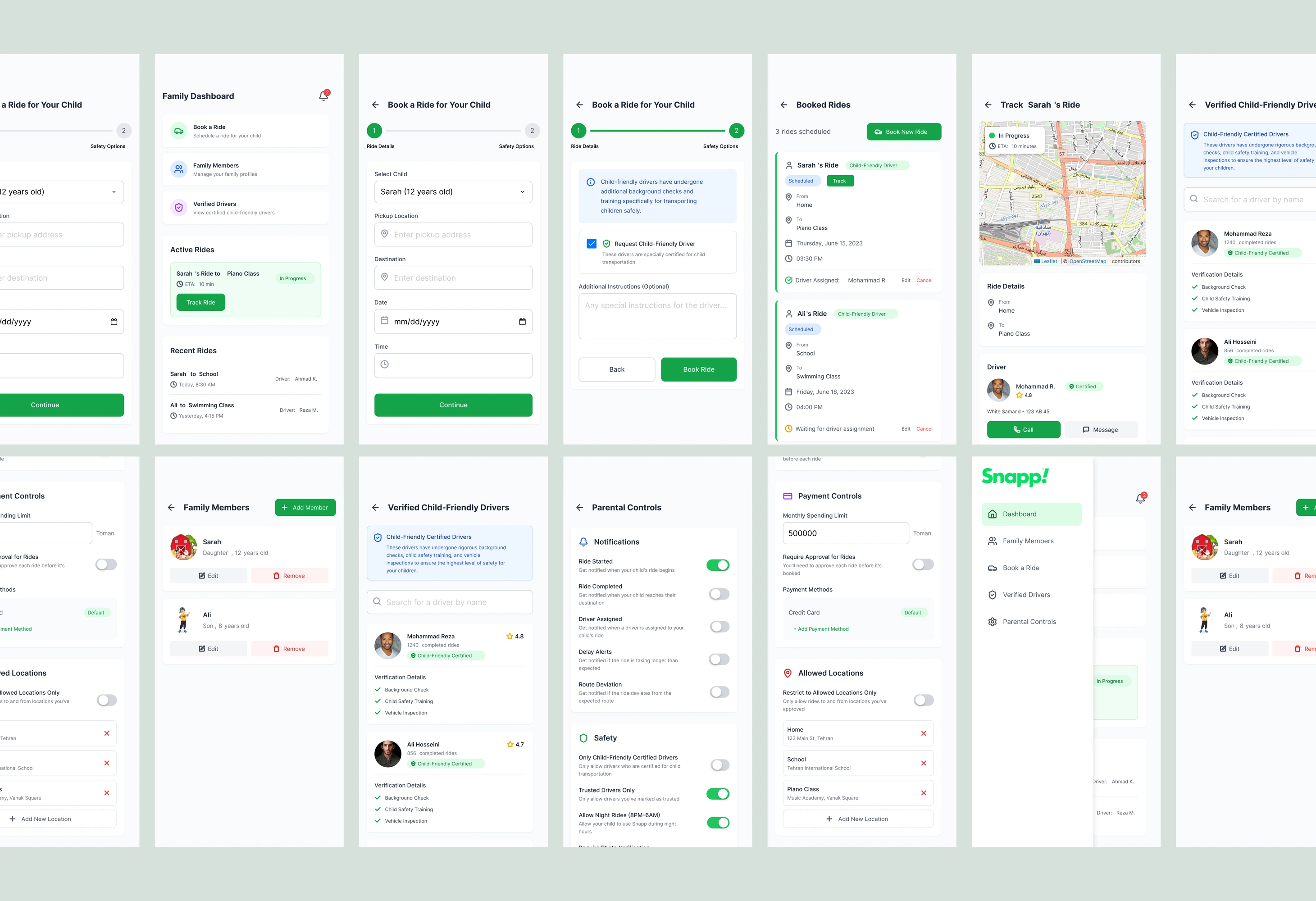
I translated the research into a prototype built around shared oversight rather than surveillance.
Family dashboard
Parents can create child profiles, manage payment, review ride history, and see relevant account activity from one place.
Scheduled rides
Parents can arrange a trip in advance, reducing last-minute coordination and giving them more time to review the driver and trip details.
Proactive trip updates
Notifications cover driver assignment, trip start, route deviation, arrival, and completion. The system tells parents when attention is needed rather than requiring constant monitoring.
Driver transparency
The experience surfaces ratings, verification status, and relevant child-trip experience before the ride begins.
Child trip details
A dedicated view brings together the route, live location, trip status, driver information, and a clear path to support.
Controls and history
Parents can review spending, payment, and previous rides while preserving a clear distinction between the parent’s account and the child’s profile.
Longer-Term Service Concept
A dedicated children’s service would require more than a branded ride type. The research indicated the need for trained and certified drivers, enhanced background checks, verified vehicle standards, appropriate insurance, and a specialist support channel.
I recommended treating this as a separate MVP with operational and safety validation before broader rollout.
Recommended Rollout
- Launch and test the Family feature as the lower-cost, scalable first step.
- Communicate safety measures transparently; trust cannot depend on marketing language alone.
- Prototype a dedicated service with narrowly defined routes, users, and trained drivers.
- Measure adoption, scheduled-ride completion, support incidents, route deviations, parent confidence, and repeat family usage.
Reflection
This project changed the way I think about trust. Trust is not a single feature or a reassuring message. It is the result of visible standards, predictable behavior, clear accountability, and a credible response when something goes wrong.
It also reinforced the value of phased product strategy. A scalable account feature can test demand and behavior, while a separate operational MVP can evaluate the higher-risk service model without pretending the two require the same level of investment.